Home › Asphalt Sealcoating & Crack Filling
Protect your investment with expert asphalt sealcoating in Boston, MA. We clean and fill cracks, then apply a high-quality sealer that shields your driveway from weather, UV damage, and oil stains.
Precision Asphalt Boston provides professional asphalt sealcoating throughout Boston, MA, Massachusetts and the surrounding area. Our licensed, insured crew delivers safe, clean, on-time work with a free estimate before anything begins. Call (617) 648-5798 or request your free quote.
Asphalt Sealcoating & Crack Filling in Boston, MA
Asphalt in Boston takes a beating from freeze-thaw cycles, road salt, and plow blades. If your driveway or parking lot is starting to show gray, dry areas or visible cracks, it is time to look at asphalt sealcoating and crack filling instead of waiting for expensive resurfacing. Precision Asphalt Boston focuses on practical, long lasting maintenance that fits New England conditions, not quick cosmetic touch ups.
Sealcoating is a protective layer that slows down oxidation, blocks water penetration, and makes snow removal easier. Crack filling stops water from getting into the base layer, where it can freeze and break the pavement apart. Done correctly and at the right time of year, these two services can easily add 5 to 8 years to the life of your asphalt in Massachusetts.
We structure every job around local conditions: typical Boston traffic patterns, tight urban lots, and the local climate window where sealers actually cure. When you contact Precision Asphalt Boston, we look at the age of your pavement, drainage, shaded areas that stay damp, and how the surface will be used, then propose a scope of work that matches reality and budget.
How Our Asphalt Sealcoating Process Works
A good sealcoat starts with surface prep. We begin by mechanical cleaning of your asphalt, usually with high power blowers and steel bristle brooms. In parking lots we add rotary sweepers where needed. The goal is to remove sand from winter plowing, salt residue, loose aggregate, and any organic material so the sealer bonds to asphalt, not to dust.
Next we pretreat stains. Oil and fuel spots are scrubbed with a detergent or oil spot primer. In Boston we often see leaks from older vehicles that sit over the winter, and if these areas are not primed the sealer will peel. We will tell you honestly if heavily saturated spots need patching instead of simple priming.
Once the surface is clean and dry, we apply a commercial grade asphalt sealer. Precision Asphalt Boston primarily uses refined coal tar or asphalt emulsion sealers, depending on local regulations and the property type. Coal tar sealer offers superior chemical resistance to dripped gas and oil, which is useful for busy parking lots near Boston. Asphalt emulsion is lower odor and preferred in residential neighborhoods or near sensitive facilities. We discuss these options with you before scheduling work.
We typically apply two coats for driveways and light duty parking lots, using spray application with brush cutting at edges to avoid splatter on curbing, walkways, and garage doors. Heavier use areas like entry lanes or loading zones may receive an additional pass in the wheel paths. Dry times are influenced by temperature, humidity, and shade. On a typical Boston summer day, foot traffic is allowed after about 4 to 6 hours and vehicle traffic after 24 hours, but we will set site specific reopening times based on conditions.
Crack Filling: Stopping Boston Freeze-Thaw Damage
Crack filling is not just squeezing some material into a gap. The way it is done has a direct impact on whether your asphalt survives the next Massachusetts winter. Precision Asphalt Boston starts by classifying the cracks. Hairline surface checking is usually handled during sealcoating. Active working cracks that are 1/4 inch to 1 inch wide get routed and filled. Wider cracks, edge failures, and alligator cracking may require cut out and patching rather than simple filling.
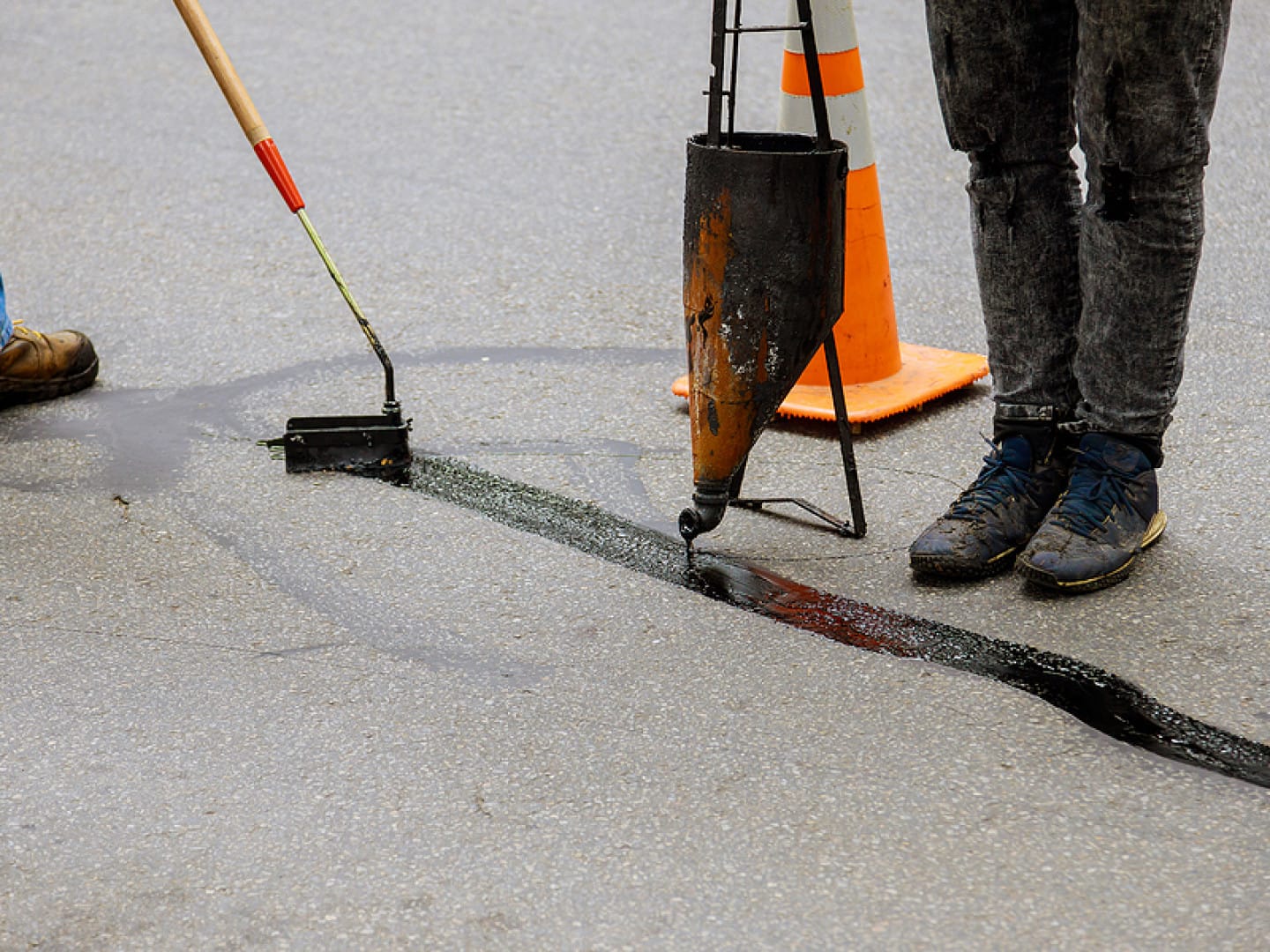
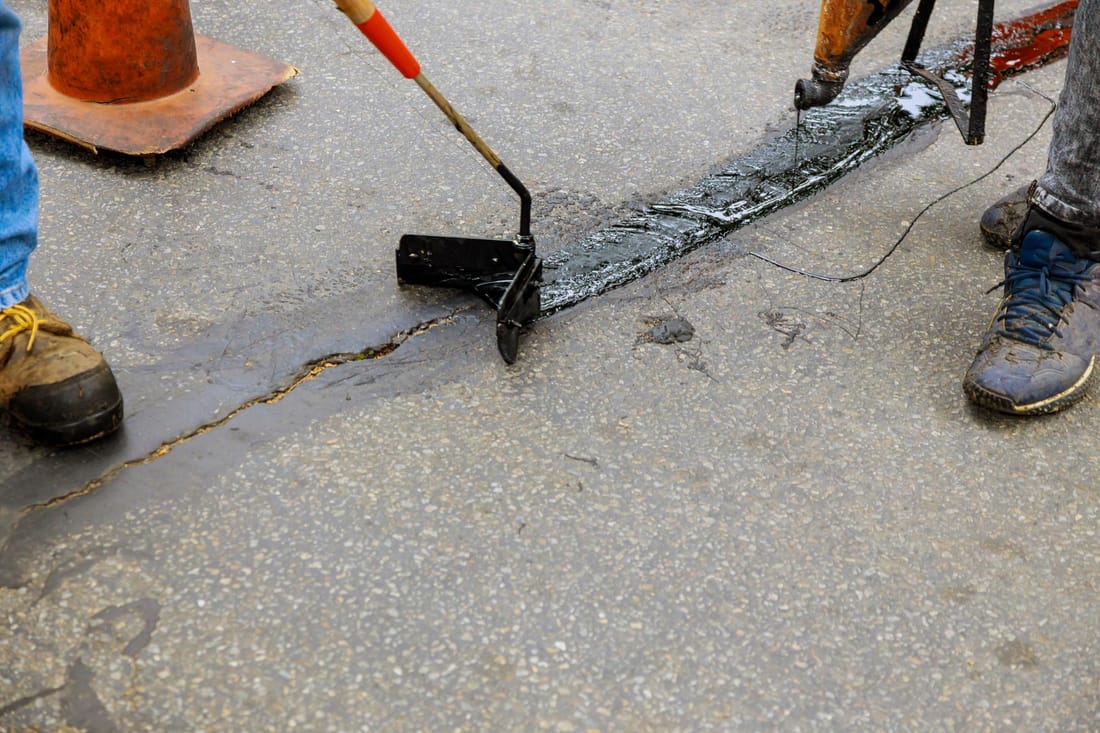
For most structural cracks we use a hot pour rubberized crack sealant that stays flexible as temperatures swing from January lows to July highs. First we clean the crack with high pressure air, sometimes with a wire wheel or a crack router to square the edges and remove weak material. This step is critical in Boston because sand and salt from winter plowing tend to pack into the cracks and must be removed or the filler will debond.
The heated material is then poured or applied with a wand slightly overfilling the crack. We strike off the excess with a squeegee to create a smooth band that sheds water. On commercial lots we commonly apply a wider band in traffic lanes where plow blades ride. For residential driveways we keep the band tighter for a cleaner look, while still sealing the joint properly.
Not every crack should be filled. Long, wide, sunken areas, deep potholes, and interconnected alligator patterns usually indicate base failure. In those spots we will recommend saw cut and full depth patching before any sealcoating. Putting sealer over structural failure is a waste of your money, and our crew will tell you that upfront.
Seasonal Timing and Local Conditions in Boston
Boston’s climate heavily influences when and how we schedule asphalt sealcoating and crack filling. Sealcoating requires pavement and air temperatures typically above 50 degrees and rising, with no rain in the forecast and enough daylight for initial curing. In practical terms, the main window in eastern Massachusetts runs from late April through early October, with peak conditions from late May to mid September.
In spring we focus more on crack filling and repair of winter damage, then follow with sealcoating once overnight lows have stabilized. Early spring jobs sometimes need longer closure times because the sun angle is lower and shaded areas dry more slowly. If your property has heavy tree cover, north facing slopes, or sits near the harbor where fog is common, we will plan accordingly.
Fall sealcoating is possible in Boston, but we are stricter about temperature and start times. As days shorten, we may start earlier and limit the amount of surface we open at once so everything has a fair chance to cure before evening dampness sets in. This protects you from tracking and premature wear.
Winter is generally not appropriate for sealcoating. However, emergency crack filling and temporary cold patch repairs can still be done on milder days to control water infiltration. Precision Asphalt Boston will explain clearly when it is smarter to wait until spring rather than pushing work into unfavorable conditions just to get it done.
Pricing, Site Conditions, and What Affects Cost
Sealcoating and crack filling costs are driven by more than square footage. When Precision Asphalt Boston prices a job, we look at several specific factors so there are no surprises later.
Surface condition is the first driver. A clean, relatively smooth asphalt surface with limited cracking can be sealed efficiently and at a lower per square foot rate. Lots with extensive oil spots, heavy vegetation in cracks, or prior sealer buildup require more prep time and sometimes specialized primers, which increase cost. In older Boston neighborhoods we sometimes deal with multiple generations of sealer, which may be peeling; that requires extra scraping and cleaning.
Crack density matters as well. A driveway with only a few 10 foot cracks will cost less to treat than a lot with a network of interconnected cracks that need routing, blowing, and filling. We typically separate line item pricing for crack filling from sealcoating so you can see exactly where your money is going.
Access and layout also influence price. Tight urban driveways, courtyards, or lots that require small equipment and more hand work take longer than open suburban layouts. If vehicles must be moved in phases, or if we have to coordinate around Boston business hours, restaurant deliveries, or condo schedules, we will plan staging in detail and explain any cost impact.
Finally, traffic type affects material selection and thickness. A small residential driveway can use a slightly lighter mix design than a busy commercial lot that sees delivery trucks or ride share pickup zones all day. We adjust sand load, latex additives, and number of coats based on how the pavement is actually used, not as a one size fits all approach.
What to Expect When You Hire Precision Asphalt Boston
Before any work, we schedule an on site visit in Boston or the surrounding towns to inspect your asphalt. We document existing cracks, drainage issues, and prior repairs, then provide a written proposal that outlines prep work, crack filling scope, sealer type, number of coats, and curing times. You will know exactly what areas are being treated and what is excluded.
On work day, our crew will cone and tape off the work zone, then start with sweeping and blowing. If crack filling is included, that is completed and allowed to cool before sealcoating begins. We keep you informed of progress, particularly when multiple areas or phases are involved so tenants or customers know when to move vehicles.
You will receive clear instructions on when you can walk and drive on the new surface, how to protect it in the first 48 hours, and what to expect visually. Fresh sealer often looks slightly streaky as it cures, especially in shaded Boston side streets, but it evens out with time. We also discuss realistic life expectancy. Under typical Massachusetts use, a properly sealed and maintained driveway might be resealed every 3 to 4 years, while a high traffic lot could benefit from a 2 to 3 year cycle.
If you are unsure whether your pavement is a good candidate for asphalt sealcoating and crack filling, Precision Asphalt Boston will tell you the truth. Our goal is to extend the life of sound asphalt, not cover up problems that really call for resurfacing or reconstruction.