Home › Parking Lot Sealcoating & Maintenance
Protect your commercial investment with professional parking lot sealcoating in Boston, MA. We clean, crack-fill, and seal asphalt surfaces to slow aging, improve appearance, and reduce long-term repair costs.
Precision Asphalt Boston provides professional parking lot sealcoating throughout Boston, MA, Massachusetts and the surrounding area. Our licensed, insured crew delivers safe, clean, on-time work with a free estimate before anything begins. Call (617) 648-5798 or request your free quote.
Parking lot sealcoating that is built for Boston weather
Parking lots in Boston take a beating. Between freeze-thaw cycles, road salt, plow blades, summer heat, and steady traffic, unprotected asphalt breaks down fast. Precision Asphalt Boston focuses on parking lot sealcoating that is matched to local conditions, not a one-size-fits-all product.
Sealcoating is a thin protective layer that locks out water, salt, oil, and UV. Done correctly, it can easily double the useful life of your asphalt surface and keep it looking sharp for customers and tenants. Done poorly, it peels, tracks, and sometimes makes drainage worse.
We start every job with a walk-through of your lot, looking at where water sits after a storm, where plow trucks scrape, and where turning traffic grinds the surface. From there we decide how much prep is needed and what mix design to use. Busy retail plazas, medical offices, and small condo lots in Boston and the surrounding towns each have different needs. We explain what we recommend and why, so you know exactly what you are paying for and what kind of lifespan to expect.
Our step-by-step parking lot sealcoating process
Precision Asphalt Boston follows a specific field process on every parking lot sealcoating project so you get a consistent result.
1. Cleaning and surface prep: We use power blowers and steel brooms to remove sand, leaves, and loose grit. In heavy traffic areas or near entrances, we often bring in a power sweeper. Sealcoat will not bond to dirt, so this step is critical in older Boston lots that have seen many winters.
2. Oil spot and chemical treatment: Dripping engine oil and hydraulic leaks soften asphalt. We treat those spots with an oil spot primer or degreaser, then rinse and allow time to dry. If the pavement is too saturated, we may recommend cutting out and patching that area instead of just coating over it.
3. Crack cleaning and sealing: We route or wire-brush cracks wider than hairline, then blow them clean and install hot-pour crack sealant from a melter. This flexible rubber seal keeps water from getting under the pavement where frost can push it apart. We focus on transverse and longitudinal cracks and joints at catch basins, which are common failure points in Massachusetts.
4. Pothole and patch repairs: If sections are already breaking up, we suggest saw-cut patches or infrared repair before sealcoating. Sealcoat is not a structural fix; it protects the asphalt that is still sound. Patching first means you are not spending money to dress up failed pavement.
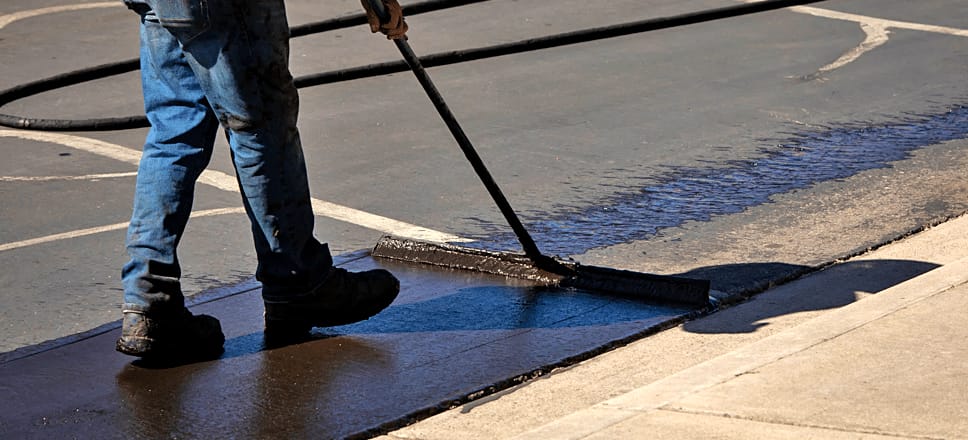
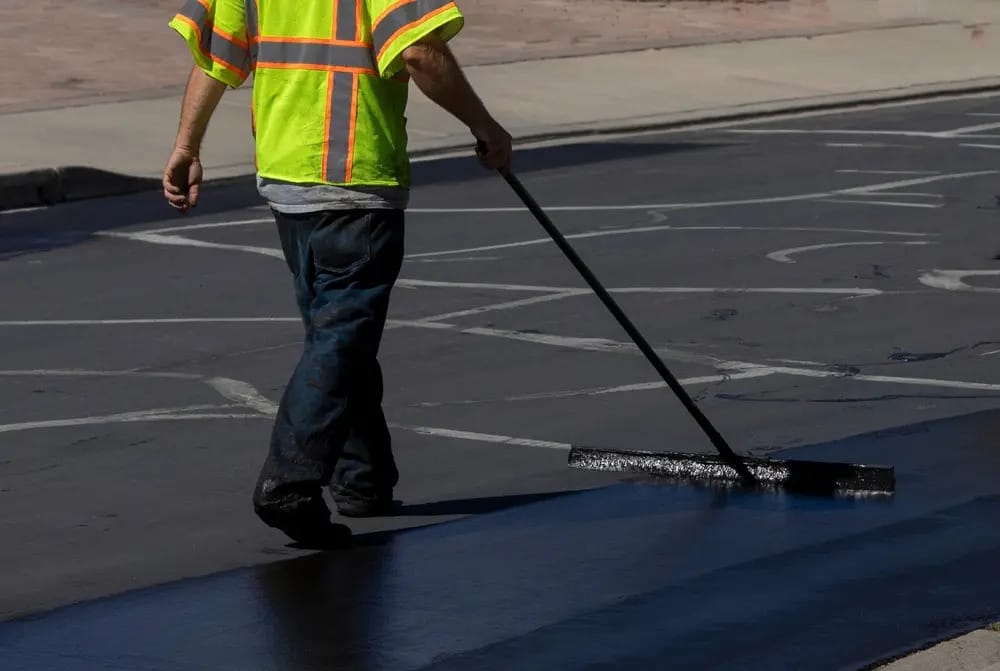
5. Sealcoat application: For most commercial lots we apply two coats. We use either spray, squeegee, or a combination method depending on the surface texture and the sensitivity of nearby cars and buildings. Tight areas along curbs and walkways often get squeegee-applied material for better control, while wide open areas are sprayed for efficiency and a smoother finish.
6. Curing and reopening: In a typical Boston summer, lots can often be reopened to light traffic within 24 hours, but shaded sections and humid coastal air can slow cure times. We set a clear schedule with you and post temporary barricades and signage so drivers do not track uncured sealer.
Materials, options, and how they affect cost
Not all parking lot sealcoating products are the same. Precision Asphalt Boston primarily uses commercial-grade asphalt emulsion sealers that meet or exceed Massachusetts and local environmental requirements. We choose products that stand up to de-icing salt and plow work, which are major factors in our area.
Material choices: On low-traffic private lots, a standard asphalt emulsion with sand and latex additive often gives an excellent balance of protection and cost. On high-traffic entrances, loading zones, or busy drive lanes, we may recommend a more heavily fortified mix with extra sand for traction and increased wear resistance. These areas get scuffed hard by turning tires, especially near delivery doors and tight corners.
Number of coats: One coat is sometimes used in very light use areas, but for most Boston commercial parking lots, we recommend two coats for even color and longer life. A second coat does add material and labor cost, but it usually stretches the reseal cycle from every 2 years to closer to every 3, which reduces long-term cost per year.
Prep and repairs: The largest cost variables are crack filling and patching. A smooth, newer lot with minor cracking will be much less expensive to seal than an older surface with heavy alligator cracking and potholes. We provide separate line items for crack sealing, patch work, and sealcoating so you can see where your money goes and decide what to prioritize based on your budget.
Layout and access: Tight city lots in Boston, like behind mixed-use buildings or in Back Bay alleys, take more time because equipment access is limited and traffic control is more complicated. Wide suburban office parks are usually more straightforward and cost-effective per square foot. We factor staging, traffic phasing, and overnight or weekend work into our pricing so you are not surprised by change orders later.
Maintenance planning, timing, and what Boston owners should expect
Parking lot sealcoating is not a one-time fix. It is part of a maintenance cycle. Precision Asphalt Boston helps property managers, condo associations, and small business owners map that cycle out so they can budget and avoid emergency repairs.
Typical cycle: For a lot in decent condition, we often suggest crack sealing as needed and resealing every 2 to 4 years depending on traffic volume, exposure to sun, and how often plows and sand are used. Very busy retail centers or lots near the harbor that see more salt spray may lean toward the shorter side of that window.
Weather and timing: In Massachusetts we are limited by temperature and moisture. Sealcoating should be done when both the pavement and air temperature are consistently above about 50 degrees and rising, with no rain in the forecast until the material has skinned over. In practice, the main season in Boston runs from roughly late April through early October, with the best results usually coming in late spring and late summer when temperatures are warm but not extreme.
Scheduling around your operations: We can phase work so portions of the lot remain open, or schedule evenings and weekends for businesses that are busiest during the day. For apartment complexes and medical offices, we often break the job into sections with clear maps and notices so tenants and patients still have access. Good planning keeps frustration down and prevents vehicles from driving on uncured sealer.
What to expect after sealcoating: Freshly sealed pavement will look dark and uniform. Light tire scuffing in tight turns is normal in the first few weeks, especially on hot days. This does not mean the sealer is failing. We recommend keeping heavy trucks and trailers off the surface for the first 48 hours when possible, and avoiding sharp turning of steering wheels while stationary.
Common problems, honest advice, and when to repair instead of seal
Sealcoating is a great tool, but it is not the answer to every parking lot problem. Precision Asphalt Boston will tell you when your money is better spent on more substantial repairs.
Alligator cracking: If large areas of your lot look like cracked mud or a spider web, the base underneath has usually failed. Sealcoating over this will turn it black for a short time, but the cracking will show through again quickly. In these cases, we recommend removing and replacing those sections or performing a full-depth patch.
Drainage issues: Standing water is a major enemy in our freeze-thaw climate. If your lot has birdbaths that hold water after rain or snowmelt, we flag those during the estimate. Sometimes they can be corrected with localized milling and patching. If the grade is wrong in a larger area, you may need more extensive work. Putting sealer over a puddle area without addressing slope will only hide the problem for a season.
Previous coatings and peeling: Some Boston lots have been sealed multiple times with low-quality material. This can lead to peeling layers and a surface that feels soft in hot weather. We evaluate how many existing coats are present and how sound they are. In severe cases, it may be better to let the surface wear down, resurface with new asphalt, then restart a reasonable sealcoating cycle rather than keep layering product.
Budget-based planning: If you are trying to stretch an older lot for a few more years before full replacement, we can prioritize safety and function first. That usually means crack sealing, patching trip hazards, and then sealing what is still structurally sound. We are direct about what is a cosmetic upgrade and what is protecting your investment so you can make a decision that fits your property, your timeline, and your finances.