Home › Gravel-to-Asphalt Conversions
Tired of mud and ruts in your gravel drive? Our gravel to asphalt driveway conversions in Boston, MA create smooth, clean blacktop surfaces with proper grading and drainage for year-round convenience.
Precision Asphalt Boston provides professional gravel to asphalt driveway throughout Boston, MA, Massachusetts and the surrounding area. Our licensed, insured crew delivers safe, clean, on-time work with a free estimate before anything begins. Call (617) 648-5798 or request your free quote.
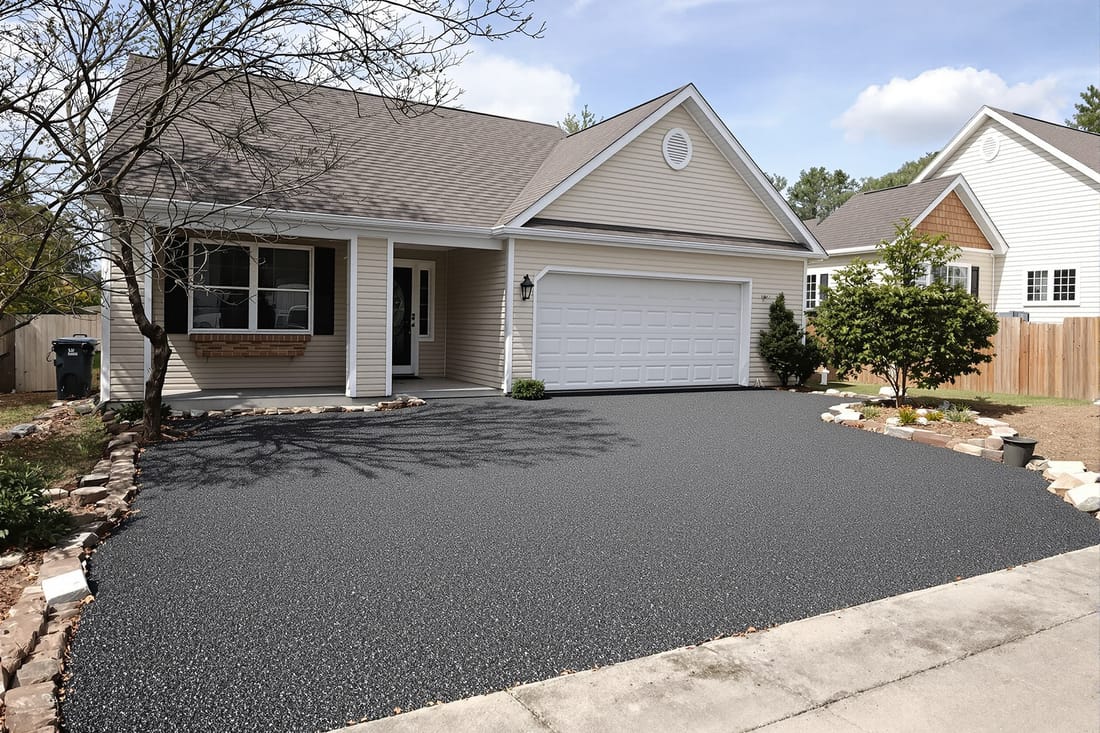
Turn Your Gravel Driveway Into a Solid Asphalt Surface
If you are tired of rutting, dust, and loose stone, converting a gravel driveway to asphalt is one of the most noticeable upgrades you can make to your property. At Precision Asphalt Boston, we focus on gravel-to-asphalt driveway conversions across Boston and the surrounding Massachusetts communities, where freeze-thaw cycles, plow damage, and steep grades make a stable surface especially important.
A proper conversion uses your existing gravel base as a starting point, but not as-is. We inspect the driveway from the street to the parking area, checking depth of stone, drainage, soft spots, and how the driveway handles heavy vehicles. In older Boston neighborhoods we also look at tight lot lines, shared drive strips, and city curb cuts so you do not run into issues with your neighbors or the city after the work is done.
Our aim is simple. Take the driveway you already have, fix its weak spots, and build a smooth, durable asphalt surface over it that will stand up to New England winters, oil deliveries, plows, and daily use without constant patching or tracking gravel into the house.
How We Convert a Gravel Driveway to Asphalt in Boston
A good gravel-to-asphalt driveway does not start with the asphalt, it starts with the base. Precision Asphalt Boston begins by grading the existing gravel and checking for at least 6 to 8 inches of solid aggregate on typical residential driveways and often more for long access roads or areas where box trucks or delivery vehicles turn. If the gravel is too thin or mixed with soft soil, we excavate and add new crushed stone to reach the right depth.
Next we address drainage, which is a big issue around Boston because of clay pockets, high water tables in coastal areas, and snowmelt. We set the driveway pitch so water moves away from the house and garage, usually aiming for at least a 1 to 2 percent slope. If water tends to pool now, we may install a shallow swale, add a trench drain near the garage, or tie into an existing drain. Fixing drainage before paving is what prevents frost heaves and potholes later.
Once the base is where it should be, we compact it with a vibratory roller in multiple passes. Any springy or pumping spots are dug out and rebuilt so they do not telegraph through the new asphalt. For conversions on hills, like in parts of West Roxbury or Milton, we pay extra attention to anchor the base at the low points so heavy rain does not wash the edges.
After base prep, we install a binder layer of hot mix asphalt where needed on heavier-use drives, then a finish course. For many Boston-area homes a single 2.5 to 3 inch compacted lift of driveway mix is appropriate, but for steeper slopes, shared drives, or commercial-style parking areas, we recommend 3.5 inches or more in two lifts. We coordinate with you on access so you are never blocked in, often paving in sections for multifamily or shared driveways.
Design Choices for Your New Asphalt Driveway
A gravel-to-asphalt conversion is also a chance to fix quirks in your driveway layout. Precision Asphalt Boston can widen narrow sections so two cars can pass, add a turnaround or parking pad, or soften tight curves that are hard to plow. In older Boston neighborhoods where space is tight, even a 1 or 2 foot widen on one side can make winter parking and trash pickup much easier.
You can choose between a straight, utility-style driveway or a more finished look with clean edges. Along busy streets like those in Dorchester or East Boston, we often recommend defined edges to keep asphalt from breaking off where cars mount the side. Options include asphalt edges graded down into the yard, or installing a row of cobblestone or precast concrete curbing that ties into the neighborhood look and helps with snow removal.
Surface finish is another design choice. A fresh driveway will always look smooth and black at first, but we adjust the mix and compaction for your use. Heavier traffic areas near multi-unit buildings or small business parking benefit from a slightly coarser surface that holds up better under tight turning. Residential single-family homes often prefer a finer finish that is easier to shovel and sweep. We can also integrate a walkway connection or apron at the garage so the transition to your existing concrete or masonry looks intentional, not patched together.
Finally, we plan for plowing. In communities like Newton, Quincy, and Medford where private plows are common, we shape the driveway ends and any islands or curves so a standard pickup with a plow blade can clear snow without tearing up the new asphalt or dropping gravel into the street.
What Affects the Cost of Converting Gravel to Asphalt
Pricing a gravel to asphalt driveway conversion in Boston depends on more than just the square footage. The single biggest factor is the condition of the existing gravel base. If the stone is deep, well compacted, and drains properly, costs are lower because we can reuse most of it. If the driveway has thin gravel on top of mud, or if we see deep ruts that hold water, we will need to excavate, bring in new base stone, and possibly install drainage, which adds to the budget but greatly increases lifespan.
Driveway layout also affects cost. Simple straight runs with good truck access are the most economical. Tight backyards in places like Jamaica Plain or South Boston, where we have to move material with smaller equipment and work around fences, stairs, and utilities, take more time. Slopes, retaining walls, and tie-ins at city sidewalks or existing concrete aprons also add steps to the project.
Asphalt thickness and mix type matter too. A light residential driveway with occasional car traffic can usually use a standard driveway mix with a single lift. A shared driveway for multiple units, a driveway that supports work vans, or a private road for a small condo complex will need thicker pavement and sometimes a different mix design. We always explain the tradeoff. Going too thin can save a bit now but often leads to cracking and base failure within a few seasons in Massachusetts weather.
Timing and coordination can influence pricing as well. If we can schedule your project along with other nearby work, we can sometimes reduce mobilization costs. On the other hand, fall rush jobs right before the first frost may carry a slight premium because of limited good-weather days and higher plant demand. Precision Asphalt Boston provides clear written estimates that break out base work, drainage, paving, and any extras so you know exactly where your money is going.
What Boston Homeowners Should Know Before Hiring
Before you commit to a gravel to asphalt driveway conversion, there are a few local realities to keep in mind. Boston and many nearby towns have rules about working near the street, sidewalks, and city trees. If your new asphalt driveway ties into a public sidewalk or changes the curb cut, permits may be required. We are familiar with the typical requirements in Boston, Quincy, and several surrounding communities and can guide you on what needs approval and what does not.
You should also ask any contractor how they handle freeze-thaw and drainage, not just how thick the asphalt will be. A pretty surface on top of a wet, underbuilt base will not last through many New England winters. At Precision Asphalt Boston we expect to see frost heaves, plow scrapes, and sanding in this region, so we design for it by making sure water has a place to go and that edges are stable where snowbanks build up.
Plan for some curing time. You can usually walk on the new driveway almost immediately, but we generally recommend keeping regular vehicles off for at least 24 to 48 hours in mild weather and longer for very heavy vehicles. During the first summer, avoid parking in the exact same spot every day during very hot afternoons and be cautious with kickstands, trailer jacks, or sharp stands that can create depressions.
Finally, talk about maintenance up front. A well-built gravel-to-asphalt conversion should not need constant repair, but routine care helps it last. That usually means cleaning off sand and leaves, avoiding harsh chemicals or fuel spills, and considering sealcoating after the first couple of years once the asphalt has fully cured. When we finish a job, we leave you with specific care notes for Boston-area conditions so you know what to watch for season by season and when to call us if something does not look right.