Home › Commercial Asphalt Resurfacing & Overlays
Refresh worn-out pavement with commercial asphalt resurfacing in Boston, MA. We repair trouble spots, then install overlays that restore a smooth surface and extend the life of parking lots and drives.
Precision Asphalt Boston provides professional commercial asphalt resurfacing throughout Boston, MA, Massachusetts and the surrounding area. Our licensed, insured crew delivers safe, clean, on-time work with a free estimate before anything begins. Call (617) 648-5798 or request your free quote.
Commercial Asphalt Resurfacing & Overlays for Boston Properties
If your commercial parking lot or private roadway in Boston is cracked, rough, or starting to ravel, you may not need a full reconstruction. Commercial asphalt resurfacing and overlays let Precision Asphalt Boston restore a worn surface by installing a new asphalt layer over the existing base, which is often faster and more cost effective than tearing everything out.
In Greater Boston we work on a wide range of commercial properties: triple decker apartment lots in Dorchester and East Boston, medical offices near Longwood, retail plazas along Route 1, industrial yards in Everett and Chelsea, and condo associations in the inner suburbs. Each of these properties has different traffic patterns and drainage issues, so the resurfacing approach is always tailored to the site, not pulled from a generic template.
A resurfacing or overlay project is usually the right choice when the pavement surface is tired but the underlying base and subgrade are still solid. That means there are no widespread soft spots, pumping water, or large areas of alligator cracking that go deeper than the top asphalt layer. When we visit your site, we core or probe the pavement in a few locations and walk the lot with you to explain where resurfacing is appropriate and where isolated full depth repairs are needed first.
How Commercial Asphalt Resurfacing Actually Works
Commercial asphalt resurfacing is more than just laying a thin coat of blacktop over what is already there. Precision Asphalt Boston follows a sequence of steps that are designed around New England weather and local soil conditions so the overlay lasts through freeze and thaw cycles.
First, we evaluate the existing pavement structure. We look for drainage patterns, standing water, traffic wear at entrances and loading zones, and signs of base failure such as deep ruts or heaving near catch basins. Any areas with structural damage are marked for full depth or partial depth repair instead of simple overlay. This is critical in older Boston lots that may have been paved over compacted fill or cobblestone remnants.
Second, we mill or grind the existing asphalt where needed. For many commercial overlays we mill 1 to 2 inches at tie in points such as sidewalks, garage thresholds, and roadway connections so new asphalt meets existing elevations cleanly without creating trip edges. Around catch basins and trench drains we often perform deeper milling to reset rims so water still flows to inlets after the overlay goes down.
Third, we repair localized failures. That can include saw cutting and removing broken asphalt sections, re compacting the base, adding new aggregate where the base has washed out, and installing base asphalt lifts before the final surface course. In Boston, narrow alley lots and older brick foundation edges often need this careful base repair so vibrations from compaction do not damage surrounding structures.
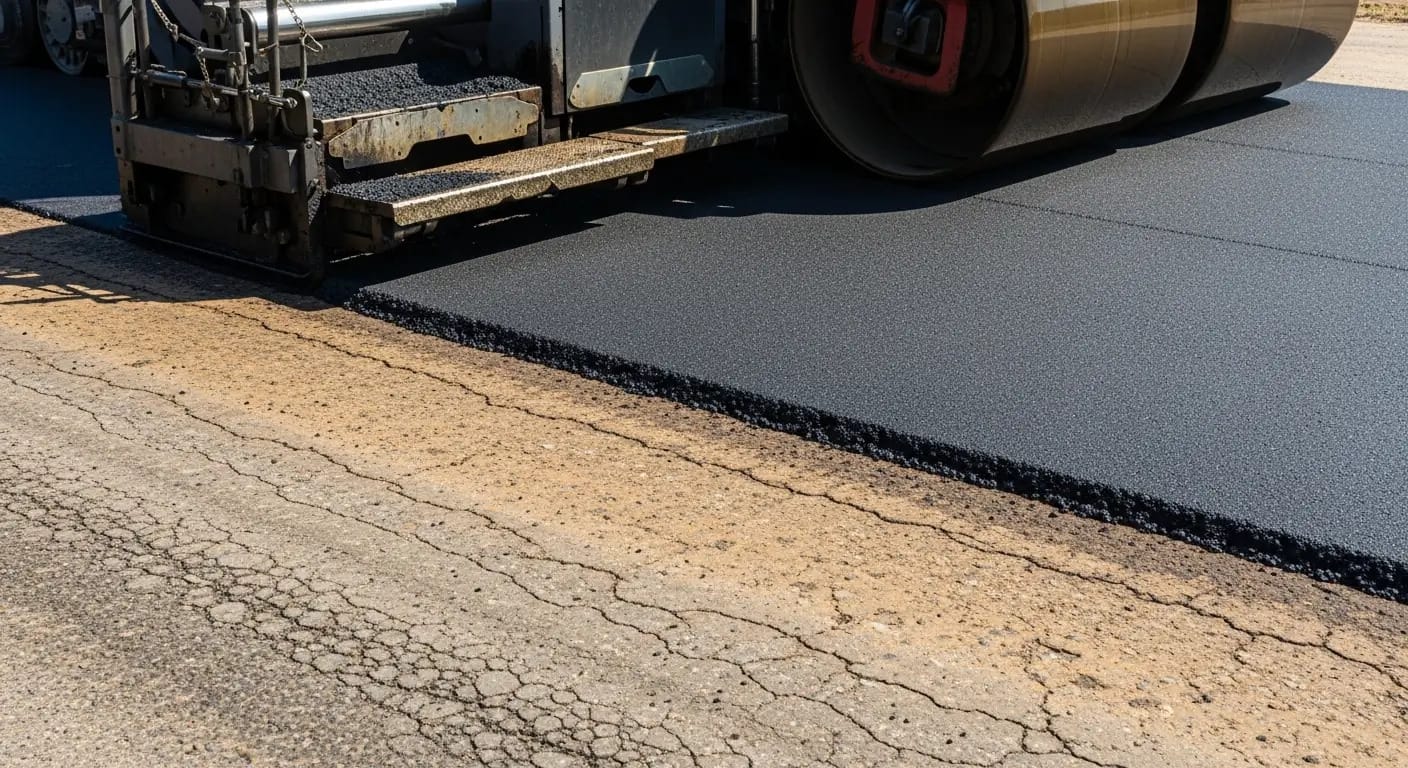
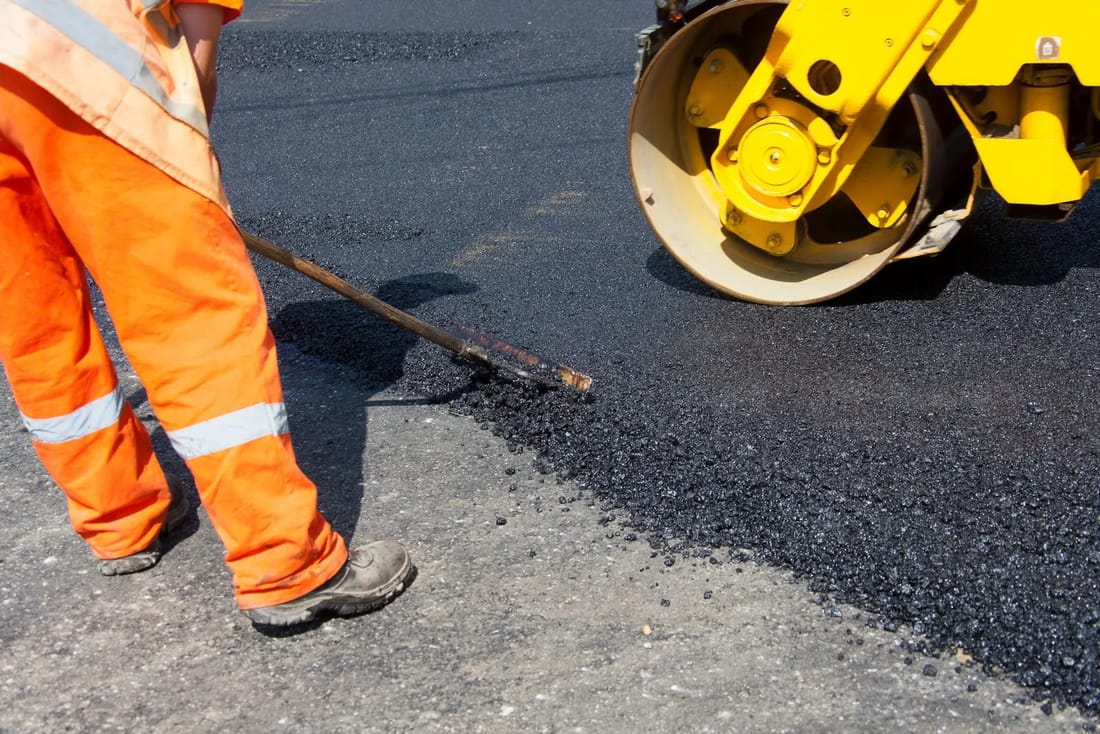
Finally, we apply a tack coat, then pave a new asphalt layer of 1.5 to 3 inches, depending on the use of the lot and the existing structure. For light duty parking we may install a 1.5 inch overlay. For bus routes, delivery routes, and dumpster pads we recommend thicker lifts or a combination of overlay plus reinforced base repairs. We compact with steel drum and pneumatic rollers in multiple passes, adjusting rolling patterns to prevent pushing the old surface beneath.
Overlay Design Options, Materials, and Markings
Not every commercial asphalt resurfacing project uses the same mix or layout. Precision Asphalt Boston works with local plants in Massachusetts to specify mixes that perform well in our climate and match your property use.
For most overlay projects we recommend a dense graded surface mix with polymer modified asphalt binder for better resistance to rutting and cracking in high traffic areas. On lots that see frequent oil drips or forklift traffic, such as small warehouses in South Boston or Revere, we may upgrade to a higher performance mix that resists shoving at turns and stopping zones.
If your property has steep grades or frequent freeze thaw cycles that create surface cracking, we can discuss reinforcing fabric or grid placed between the old surface and the new overlay. This interlayer helps delay reflective cracking, where old cracks work their way back up through the new lift. We use this often on older commercial lots around Roxbury and Jamaica Plain where the original pavement is thin but the base is still serviceable.
After paving, we restripe and re stencil your lot to meet current Boston and Massachusetts code requirements. This can include revising ADA compliant parking layouts, adding crosswalks near building entries, redesigning traffic flow arrows to reduce congestion at tight entrances, and updating fire lane markings. If your business wants to change stall widths or convert spaces for EV charging, this is the best time to adjust the layout before the paint goes down.
We also discuss surface texture and finish with you. For example, loading docks may benefit from a slightly coarser texture for traction, while high visibility entrances to professional offices might lean toward a smoother finish that looks sharp while still meeting skid resistance guidelines.
Costs, Scheduling, and What Drives Your Price in Boston
Commercial asphalt resurfacing usually costs substantially less than full depth reconstruction because the existing base and some asphalt structure are reused. However, the cost can still vary quite a bit based on site conditions, access, and design choices. Precision Asphalt Boston is transparent about what drives your price so you can make informed decisions.
Key cost factors include the total square footage of the area to be resurfaced, the thickness of the overlay, and how much milling is required. Complex layout with many islands, manholes, and utility structures costs more per square foot than a simple rectangular lot because of extra cutting, handwork, and adjustments.
Base and drainage repairs are another major driver. In older parts of Boston, we often encounter poor drainage near building entries where downspouts discharge directly onto pavement or where the lot pitches back toward the structure instead of toward basins. Correcting these issues may involve fine grading, small concrete gutter sections, or re setting catch basins. While it adds to the upfront cost, fixing drainage sharply increases the life of the overlay and reduces ice hazards in winter.
Access and staging also affect price. Downtown and densely built neighborhoods may require night work, smaller equipment, or phased construction to keep part of your lot open. In those cases we plan the work in stages so tenants, staff, or customers always have a way in and out. Mobilization, traffic control, and off hours operations add some cost, but we walk through options so you can balance budget against operational disruptions.
Most commercial resurfacing projects can be completed in one or two days of paving once prep work is done, with striping typically following within 24 hours, weather permitting. In peak paving season in Massachusetts, scheduling fills quickly, so we recommend lining up work several weeks ahead, especially if you need it done during a specific shutdown period or school vacation window.
Common Issues, Local Considerations, and How We Protect Your Investment
Boston’s climate and building patterns create some specific challenges for commercial asphalt resurfacing, and Precision Asphalt Boston plans projects around those realities so you get the longest life out of your overlay.
Freeze thaw cycles, road salt, and plowing are tough on pavement. We pay particular attention to joints at entry aprons, where city plows catch edges, and around concrete features like sidewalks and curbs. Proper milling at tie in points, strong tack coat application, and careful compaction at the edges help prevent early raveling and edge cracking.
Narrow lot layouts are common around older mixed use buildings. In these tight spaces, keeping drainage functioning is as important as the asphalt itself. We verify slopes with laser levels before paving, and we often recommend minor grade adjustments at the back of lots or near stairwells to eliminate chronic puddles that turn into ice patches in winter. Where space is tight for standard drain structures, we can discuss trench drains or small surface inlets that work within your existing constraints.
Utility structures are another local issue. Many Boston commercial properties have manholes, valve boxes, and handholes scattered throughout the lot. Before overlay, we locate and mark each one, then either lower or raise structures as needed when milling and paving. Skipping this step leads to lids that sit too high or too low in the finished surface, which creates hazards and accelerates pavement wear at those points.
After the overlay is complete, we walk you through care recommendations that fit commercial use in Massachusetts. That typically includes waiting the appropriate time before allowing heavy vehicles on the new surface, setting up a sealcoating and crack sealing schedule appropriate for our climate, and planning snow plowing methods that avoid gouging fresh asphalt. For properties with frequent deliveries or trash pickup, we may recommend concrete pads or thicker asphalt sections in high stress areas to prevent rutting and shoving over time.
Our goal with every commercial asphalt resurfacing project is not just a fresh black surface but a pavement structure that works with your existing buildings, site grades, and traffic patterns so the overlay delivers value for as many New England winters as possible.