Home › Walkway and Pathway Paving
Create safe, attractive access routes with asphalt walkway paving in Boston, MA. We design and pave smooth paths that connect driveways, entries, and outdoor spaces while standing up to everyday foot traffic.
Precision Asphalt Boston provides professional asphalt walkway paving throughout Boston, MA, Massachusetts and the surrounding area. Our licensed, insured crew delivers safe, clean, on-time work with a free estimate before anything begins. Call (617) 648-5798 or request your free quote.
Asphalt Walkway Paving Built for Boston Properties
Precision Asphalt Boston installs and repairs asphalt walkways and pathways that hold up to New England winters and heavy foot traffic. We focus on practical design, correct drainage, and clean edges so the path looks good and stays safe for years.
Asphalt walkway paving works well for homes, condos, schools, and commercial sites in Boston because it handles freeze–thaw cycles better than many rigid surfaces. When it is installed with the right base and slope, it flexes slightly instead of cracking apart. Our crews work all over Boston and the surrounding towns, so we are familiar with older properties, tight city lots, and tricky access behind triple‑deckers.
If you need a new walkway, a looped walking path, or a resurfaced route to a parking area, we look at how people actually use the space. That includes snow blower routes, trash barrel paths, stroller and wheelchair access, and service access to yards or alleys. The goal is a walkway that functions year‑round, not just something that looks good on the day it is paved.
Planning Your Walkway or Pathway Layout
A solid asphalt walkway starts with the layout. On every job, Precision Asphalt Boston measures the area, checks grades, and identifies how water moves across your property. In Boston, many yards pitch toward the house or toward a neighbor, so we plan slopes that pull water away from foundations, steps, and entries.
For residential projects, we often widen existing walkways by 6 to 12 inches to better fit modern use, such as side‑by‑side walking or moving carts. For multi‑family and commercial sites, we check ADA‑related details like cross slopes, transitions at curb ramps, and changes in elevation to reduce tripping hazards.
You can choose simple straight runs or gentle curves to work around trees, utilities, and tight urban boundaries. In dense Boston neighborhoods, we frequently navigate around granite steps, old stone walls, and shared driveways. When there are existing features you want to keep, we set string lines and use marking paint so you can clearly see the new alignment before any ground is opened up.
At this stage we also decide where to thicken the section. Areas at driveway crossings, dumpster pads, or delivery routes often need deeper base stone and a slightly thicker asphalt mat so rutting and settlement do not show up after one or two winters.
How We Build a Durable Asphalt Walkway
The actual construction process is what determines how long your walkway will last. Precision Asphalt Boston follows a consistent sequence on every asphalt walkway paving job, adjusted to site conditions.
First we handle demolition and excavation. Old asphalt, concrete, brick, or pavers are removed and hauled off. Soft or organic soils are dug out, usually 6 to 10 inches below finished grade for walkways, depending on usage and existing ground conditions. In parts of Boston with fill or very soft soil, we may go deeper or add geotextile fabric to stabilize the base.
Next we install and compact the base. We bring in crushed stone (typically 3/4 inch processed gravel) and build it up in layers, compacting each lift with a plate compactor or roller. The finished base is where we set the crown or cross slope so water sheds to one side. A tight, well‑compacted base is what prevents dipping, puddling, and frost heave.
Then we set forms or edge restraints as needed. Along garden beds or lawn we may use a clean cut edge with soil backfilled after paving. Along driveways, steps, or sidewalks, we hand form and check heights so transitions are smooth. Where needed, we install edging or recommend adding granite or concrete borders later for a more finished look.
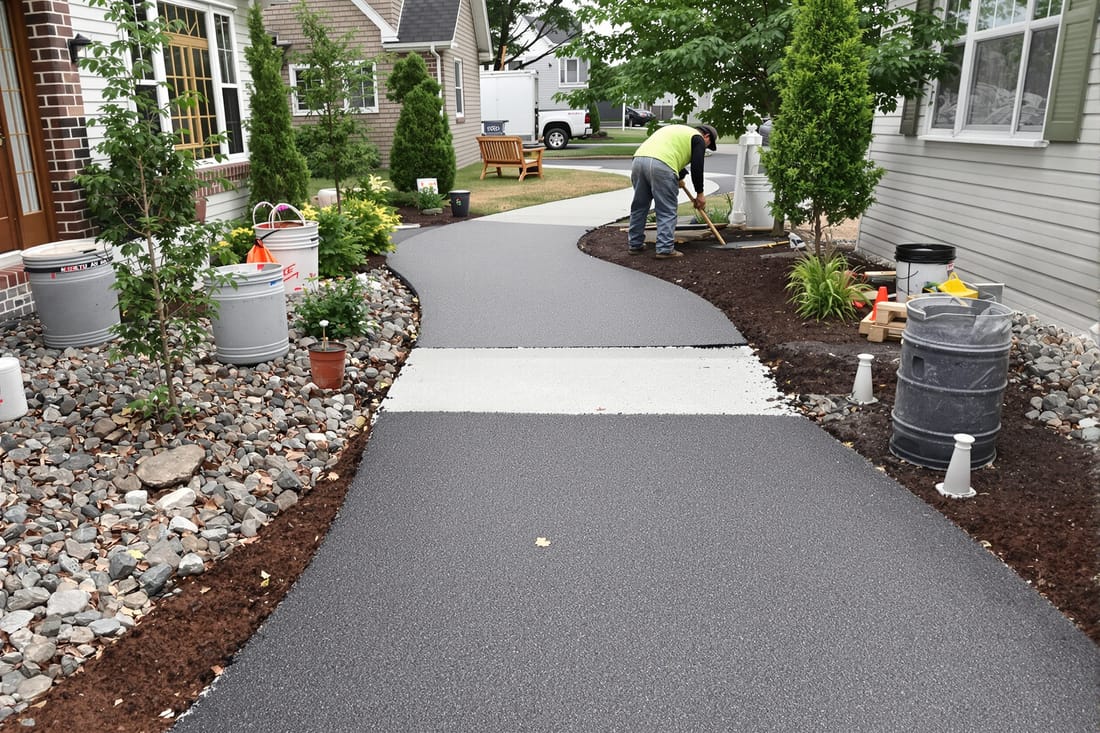
Finally we place and compact the asphalt. For walkways and paths we typically use a fine‑mix asphalt that gives a smoother surface underfoot and for wheels. The mix is delivered hot, placed either with a small paver or by hand raking on tight sites, then compacted with vibratory plate compactors and small drum rollers. We check thickness, slope, and any tie‑in seams to existing pavement before the mix cools so corrections can be made on the spot.
Design, Material, and Finish Options for Walkways
Asphalt may sound like a single option, but for walkways and pathways in Boston there are several decisions that affect the final result. Precision Asphalt Boston walks you through these choices before the work starts.
Mix type: For most pedestrian paths we recommend a finer aggregate surface mix. It creates a denser, smoother finish that is easier to shovel and plow and more comfortable for pedestrians, bikes, and strollers. In higher load areas, such as where a walkway crosses a driveway, we may use a slightly coarser or thicker layer for strength.
Thickness: Standard residential walkways are often 2 to 2.5 inches of compacted asphalt over a 4 to 6 inch base. Heavier use routes, such as school paths or access routes for maintenance vehicles, may require a thicker section. We set thickness based on actual expected use, not a one‑size‑fits‑all standard.
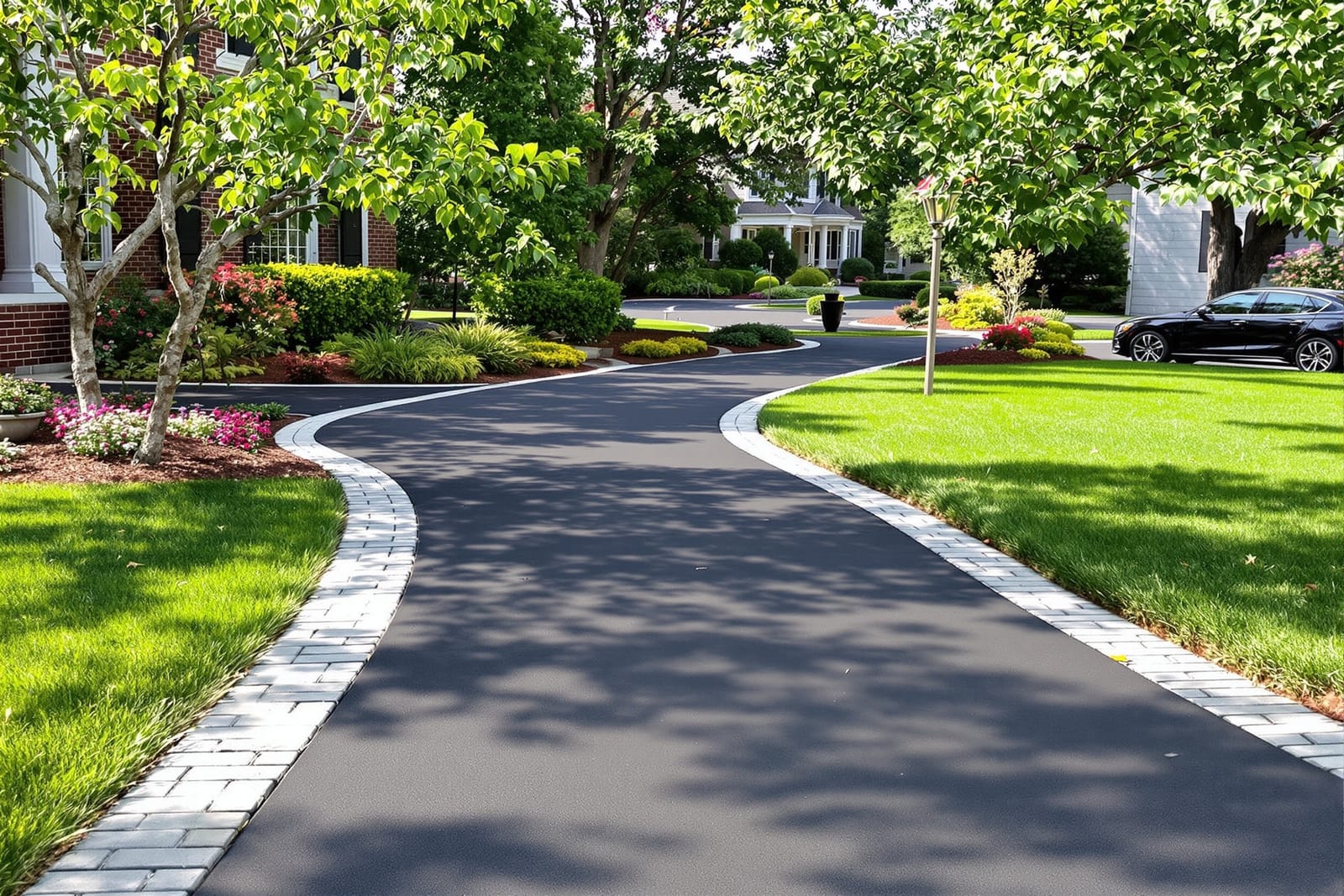
Shape and edges: Curved layouts soften tight city yards and help steer people around landscaping. Edges can be left as a compacted soil transition, or you can plan for granite curbing, concrete edges, or metal edging along garden beds. These edge decisions influence where we place and finish the asphalt so that add‑ons later still look intentional.
Color and sealer: Standard asphalt is black and gradually fades to charcoal. If you want a more uniform long‑term appearance, we can plan a sealing schedule after the first season. Sealer is not applied immediately because the asphalt needs time to cure and release oils. We explain what to expect during that curing period so the surface is protected, not trapped under sealer too early.
Costs, Site Challenges, and Common Walkway Issues
Customers in Boston often ask what really drives the cost of asphalt walkway paving. With Precision Asphalt Boston, pricing is driven primarily by access, excavation depth, base requirements, and total square footage, not just a flat per‑foot number.
Tight city access can add labor if everything must be moved by wheelbarrow or small equipment. Deep excavation or poor existing soil means more trucking and more base material. If the walkway crosses underneath utilities, we have to dig more carefully and sometimes adjust grades, which affects time on site.
We also see recurring issues on older Boston properties that we plan to correct during replacement. These include standing water along foundations because the path was pitched the wrong way, tripping hazards between old concrete steps and new asphalt, tree root uplift near street trees, and narrow walks that cannot handle modern foot traffic.
To handle these, we may suggest minor grade changes, root pruning with care for the tree, thicker base where roots have lifted the surface, or small retaining transitions. We also discuss seasonal timing. In Massachusetts, asphalt work is affected by temperature. We avoid paving walkways when it is too cold for proper compaction, even if that means scheduling during a warmer window, because rushed cold‑weather work tends to fail early.
If you are collecting estimates, ask each contractor how deep they plan to excavate, how much base they will install and compact, what mix they will use, and how they will handle edging and drainage. Clear answers to those questions tell you more than a short line item on a quote.
What to Expect When You Hire Precision Asphalt Boston
When you contact Precision Asphalt Boston for asphalt walkway paving, we start with a site visit, not just measurements from a map. We walk the property with you, talk through how you use the space, and point out any drainage or access issues we see. You receive a written proposal that spells out excavation depth, base thickness, asphalt thickness, and any repair or tie‑in work.
Before work begins, we confirm utility mark‑outs, schedule around building access and deliveries, and coordinate with your property manager or condo board if needed. On the day of construction, we secure the work area, handle demolition and excavation, then rebuild the base and install the new asphalt surface, typically within one to two days for most walkways.
After paving, we explain cure times and when you can walk, roll carts, or plow on the new surface. Pedestrian use usually begins within a day, but we recommend avoiding sharp turns with heavy equipment until the asphalt has had time to firm up. We also provide guidance on snow removal techniques that protect the new surface in the first winter.
For Boston property owners, having a local crew matters. We know how frost, road salt, and plowing affect walkways here, and we build with that in mind, not to a generic national standard. If you are planning a new walkway or replacing a failing one, we can review options on site and give you a clear plan and cost breakdown before you commit.