Home › Industrial and Heavy-Duty Asphalt Paving
Handle heavy loads with industrial asphalt paving in Boston, MA. We design and install thick, reinforced asphalt sections for truck yards, loading docks, and warehouse lots that resist rutting and failure.
Precision Asphalt Boston provides professional industrial asphalt paving throughout Boston, MA, Massachusetts and the surrounding area. Our licensed, insured crew delivers safe, clean, on-time work with a free estimate before anything begins. Call (617) 648-5798 or request your free quote.
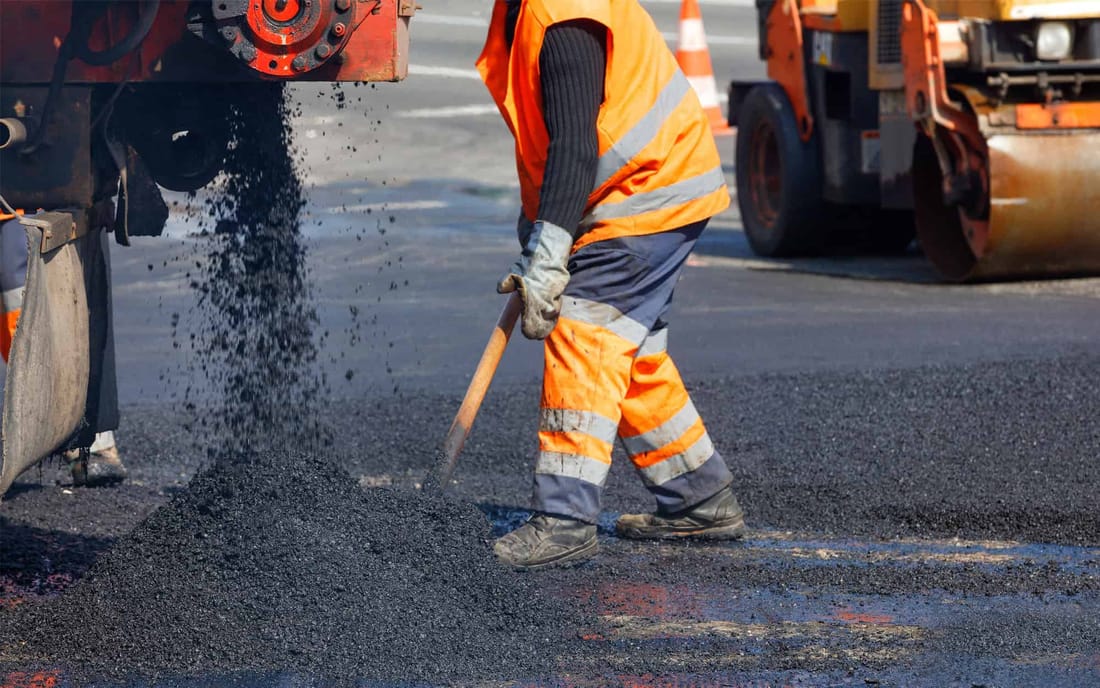
Industrial Asphalt Paving in Boston Built for Real-World Abuse
When you are paving for trucks, forklifts, or 24/7 operations, you are not buying a driveway. You are buying a work surface that has to survive constant loading, turning, and New England weather. At Precision Asphalt Boston, our industrial asphalt paving is designed specifically for heavy traffic, loading docks, distribution yards, and manufacturing sites across Boston and greater Massachusetts.
Instead of using a one-size-fits-all mix, we start by understanding what actually happens on your pavement. How many tractor trailers per day. Whether trucks are backing and turning in tight areas. If forklifts or container stacks concentrate weight in small spots. Whether there are chemical exposures, such as occasional fuel or oil spills. Those details determine the asphalt mix design, the stone base thickness, and whether you need added reinforcement at joints, entrances, or loading docks.
Boston sites have their own quirks. Older industrial lots in places like Chelsea or Everett might have undocumented fill or buried rubble. Waterfront properties in areas like the Seaport often sit on fill with high groundwater. Our crews are used to discovering these conditions during test pits, then adjusting the section design so the pavement does not settle, crack, or pump water through joints. That local experience is the difference between a surface that looks fine on day one and one that is still performing 10 or 15 winters from now.
How Our Heavy-Duty Asphalt Paving Process Actually Works
For industrial asphalt paving, we follow a multi-step process that is more rigorous than typical commercial or residential work so the pavement can take real punishment.
1. Site assessment and coring: Before pricing or designing, we usually core the existing pavement or subgrade where practical. This tells us what is under the surface, how thick your current sections are, and whether the base can be reused or must be rebuilt. For older Boston manufacturing buildings, we often see thin asphalt over mixed fill, which calls for a deeper reconstruction.
2. Grading and subgrade preparation: Heavy-duty performance lives or dies in the stone and soil under the asphalt. We regrade to establish proper slope away from buildings, doors, and loading docks, usually at least 1 to 2 percent where feasible. Soft or pumping soils are undercut and replaced with compacted gravel. In some riverfront or low-lying Boston sites, we may recommend geotextile fabric over wet or unstable soils to help stabilize the base.
3. Base installation and compaction: For heavy traffic, we typically install 8 to 12 inches of mechanically placed and compacted crusher run or dense-graded aggregate, often in two or more lifts. Each lift is compacted with heavy rollers to meet or exceed specified density. On high-volume trucking yards, we may go even thicker, or incorporate a crushed concrete layer if it suits the design and budget.
4. Asphalt mix and layer placement: Industrial work rarely uses a single lift. A common heavy-duty section might be 2 to 3 inches of binder course (larger stone, more structural) topped with 1.5 to 2 inches of finer surface course for smoothness and drainage. For high shear areas like tight turning radii or loading zones, we may increase the binder thickness or specify a mix with higher stone content and performance-grade binders that stand up better to rutting.
5. Joints, transitions, and details: Where asphalt meets concrete pads, trench cuts, or rail lines, we treat edges carefully to avoid joint failures. This can include saw-cut keyways, tack coat, and sometimes doweled transitions or thicker edges around dumpster pads or dock aprons. Those details are where many industrial pavements in Boston fail first, so we give them serious attention.
6. Final compaction and quality checks: Rollers are matched to mix temperature and thickness so density is achieved without crushing aggregate. We check surface smoothness, slopes toward drains, and joint tightness before the site is turned back to you. When needed, we can schedule work in phases or over weekends so your operations keep moving.
Design Options for Heavy-Duty Pavement in Massachusetts Conditions
Not every heavy-use site needs the same pavement structure or finish. Precision Asphalt Boston offers several design options that we tailor to how your property is actually used and how Massachusetts weather will affect it.
Heavy truck and loading dock areas: For warehouse and distribution centers that see repeated tractor trailer loading, we focus on rut-resistant sections. This often means a thicker binder lift and a performance-graded asphalt that resists deformation during hot summer days. We may also recommend concrete or reinforced asphalt aprons directly in front of dock doors where trailers tend to sit in one place for long periods.
Forklift and industrial yard traffic: Forklifts create high point loads on a small tire footprint, especially with loaded pallets or containers. To handle that, we use dense, stable base stone, tighter-graded surface mixes, and additional thickness in traffic lanes or turn zones. On outdoor storage yards where pallets, containers, or pipe are stored, we may design thicker sections in specific storage zones while keeping travel lanes more economical.
Boston winter and freeze-thaw: Our designs consider repeated freeze-thaw cycles and the use of deicing salts. Good drainage is the first defense, so we plan slopes to keep water from ponding, especially near doorways and dock wells that tend to ice up. In some cases we coordinate with drainage contractors to add catch basins, trench drains, or underdrains if the existing system is inadequate.
Surface texture and traction: Some industrial clients request a slightly coarser surface for better traction in winter or around sloped loading ramps. We can recommend mix designs that provide enough texture without being rough on forklift wheels or pallet jacks. For sites where dust control matters, we avoid mixes that ravel or shed stones.
Phased upgrades and overlays: If your existing pavement has a reasonably sound base, we may be able to mill and overlay instead of full reconstruction. For industrial asphalt paving, overlays are successful only if the underlying structure is strong, joints are repaired, and weak spots are addressed. We often propose phased projects, starting with the worst loading zones or truck lanes so you can spread costs over multiple budget cycles without losing functionality.
What Drives Cost in Industrial Asphalt Paving Projects
Heavy-duty asphalt projects have different cost drivers than small parking lots, and understanding them helps you plan and compare proposals fairly.
Existing conditions: Unknown fill, buried debris, or saturated soils under older Boston facilities can add excavation and base costs. This is why Precision Asphalt Boston often recommends limited test pits or cores before finalizing a quote. Spending a little on investigation can prevent surprise change orders during construction.
Section thickness and materials: The thicker the gravel base and asphalt layers, the higher the cost, but these are also what prevent rutting and structural failure. We are transparent about the section we are proposing, for example 10 inches of base with 3 inches of binder and 2 inches of surface, so you can compare that to any other bid. If another quote is far cheaper, it usually means the structure is thinner, the materials are lower grade, or important prep work is being skipped.
Access and phasing: Working in tight urban sites around Boston, such as inner-city industrial parks, can be more complex than in wide-open suburban yards. Limited staging space, tight truck access, and the need to keep parts of the yard operational can increase labor time. We plan phasing with you to minimize disruption and cost, sometimes working nights or weekends when necessary.
Drainage and ancillary work: Repairs to catch basins, trench drains, or subdrainage are often needed on older industrial yards where structures have settled or collapsed. Those items can be a significant part of the budget but are critical. A thick pavement section will still fail prematurely if water is allowed to sit or migrate through the stone base.
Regulatory and environmental requirements: In Boston and Massachusetts generally, industrial sites may have stormwater permits or spill containment requirements. When paving areas where oils, fuels, or chemicals can be present, we coordinate with your environmental consultant so the new surface and drainage patterns do not conflict with your permits or containment plans.
Planning Your Industrial Paving Project With Precision Asphalt Boston
A successful industrial asphalt paving project starts well before the crew shows up with equipment. Precision Asphalt Boston works with facility managers, plant engineers, and property owners around Boston, MA to plan work around real operations.
We start with an on-site walk-through where you show us how trucks move, where problems occur, and what cannot shut down. We look for visible distress, such as rutting in truck paths, cracking at dock aprons, ponding water near entrances, or heaving near catch basins. Based on that visit, we can often outline at least two approaches, for example full-depth reconstruction in critical areas and structural overlay in less stressed zones.
Scheduling is a major concern for most industrial clients. We can divide the yard into phases and create temporary traffic patterns so trucks can still access docks. On some Boston jobs, we have done weekend or night paving to keep weekday operations uninterrupted, especially for distribution centers and food facilities with strict delivery windows.
Before you hire any industrial asphalt paving contractor, ask to see previous heavy-duty projects and request section designs, not just a lump sum price. A detailed proposal should spell out base thickness, asphalt lift thicknesses, mix types, and how drainage and joints will be handled. We are happy to provide that level of detail so you know exactly what you are getting.
If you are planning an upcoming shutdown, expansion, or reconfiguration of your yard, this is often the best time to tackle paving. Reach out to Precision Asphalt Boston early in your planning so we can help you sequence earthwork, utilities, and paving in the right order. That coordination keeps your project on schedule and your new industrial pavement performing through many Boston winters.